
 SUSESO–PIAS: Redefining Social Management in Chile
About the Superintendency of Social Security
The Superintendency of Social Security (SUSESO) is a Chilean public agency established in 1953 under the Ministry of Labor and Social Security. Its mission is to oversee compliance with social security and social protection regulations, while also safeguarding individuals’ rights—particularly those of workers, retirees, and their families. SUSESO handles more than 150,000 claims annually related to social security and social credit, providing services to 100% of Chile’s formal workforce, representing approximately 8.5 million people.
Redefining Social Management in Chile
The story of how SUSESO transformed a fragmented ecosystem into a unified, secure, and efficient digital platform—positively impacting the lives of millions of people.
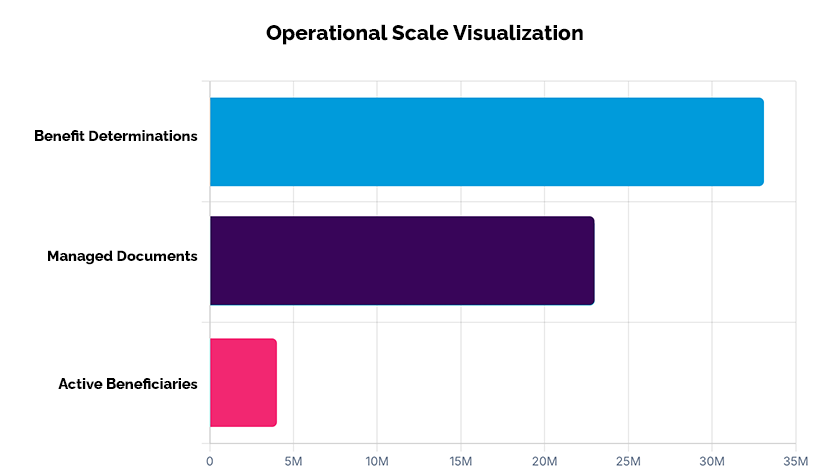
4M+
Beneficiaries
600+
Connected Entities
$330MM+
CLP Managed Annually
3
Legacy Systems Replaced
The Transformation: PIAS Is Born
Before PIAS, the management of key social benefits relied on three outdated systems, creating critical risks for both the State and citizens.

Centralization and Modernization
Data from millions of people was scattered across disconnected systems, preventing a single, unified view and generating inconsistencies.

Intelligence and Control
It was impossible to track the full lifecycle of a benefit end to end, making oversight and auditing difficult.

Traceability and Interoperability
System fragmentation increased the risk of duplicate or incorrect payments, putting billions of pesos at risk each year.

Security and Governance
Legacy platforms lacked the security, flexibility, and scalability required by a modern public sector.
Technology Architecture on Oracle Cloud Infrastructure (OCI)
PIAS is a 100% cloud-native solution built on OCI services, ensuring high availability, scalability, and security. The infrastructure, deployed in the Santiago region, is designed with disaster recovery capabilities in Valparaíso.
Kubernetes Engine (OKE)
A container environment supporting a microservices architecture. It enables zero-downtime deployments and automatic scaling, achieving 100% availability to date.
MySQL Heatwave
A high-performance database platform optimized for both transactional and analytical workloads, supporting real-time data processing at scale.
API Gateway & Load Balancer
Secure and scalable traffic management that enables seamless integration and high availability across all services.
Web Application Firewall (WAF)
Advanced application-layer security that protects the platform from threats and ensures the integrity of public data.
DevOps & Resource Manager
Infrastructure automation and continuous delivery capabilities that ensure agility, governance, and operational efficiency.
Cache & Queue Services
High-performance messaging and caching services that enable low-latency processing and reliable system orchestration.

The Challenge: A Fragmented Ecosystem
Before PIAS, the management of key social benefits depended on three legacy systems, creating critical risks for the State and citizens.
Information Silos
Data for millions of people stored across disconnected systems, preventing a unified view and creating inconsistencies.
Lack of Traceability
It was impossible to follow the full lifecycle of a benefit, complicating oversight and auditing processes.
High Fiscal Risk
Fragmentation increased the likelihood of duplicate or incorrect payments, putting billions of pesos at risk annually.
Technological Obsolescence
Legacy platforms lacked the security, flexibility, and scalability required by a modern public sector.
The Impact: A New Paradigm in Social Management
PIAS not only modernized technology—it redefined public management, delivering concrete results for the State and a fairer service for citizens.
Single Source of Truth
Data chaos was eliminated by creating an official national record that enables more effective, people-centered public policy design.
Protection of Social Investment
Public spending was safeguarded by minimizing the risk of improper payments, ensuring that every peso reaches the families who need it most.
Collaborative Ecosystem
More than 600 entities now operate on an agile, automated platform, freeing up resources and reducing administrative burden.
Trust and Transparency
The electronic case file ensures full auditability of every transaction, raising transparency standards in public fund management.
A Future-Ready State
Its cloud-native architecture enables SUSESO to adapt quickly to new regulations and evolving social needs.
If you’d like to learn more about this success story or about our experience delivering services for this industry